Heritage
The Historic Home of The King’s Troop
In Conversation With
Major General Matthew Sykes
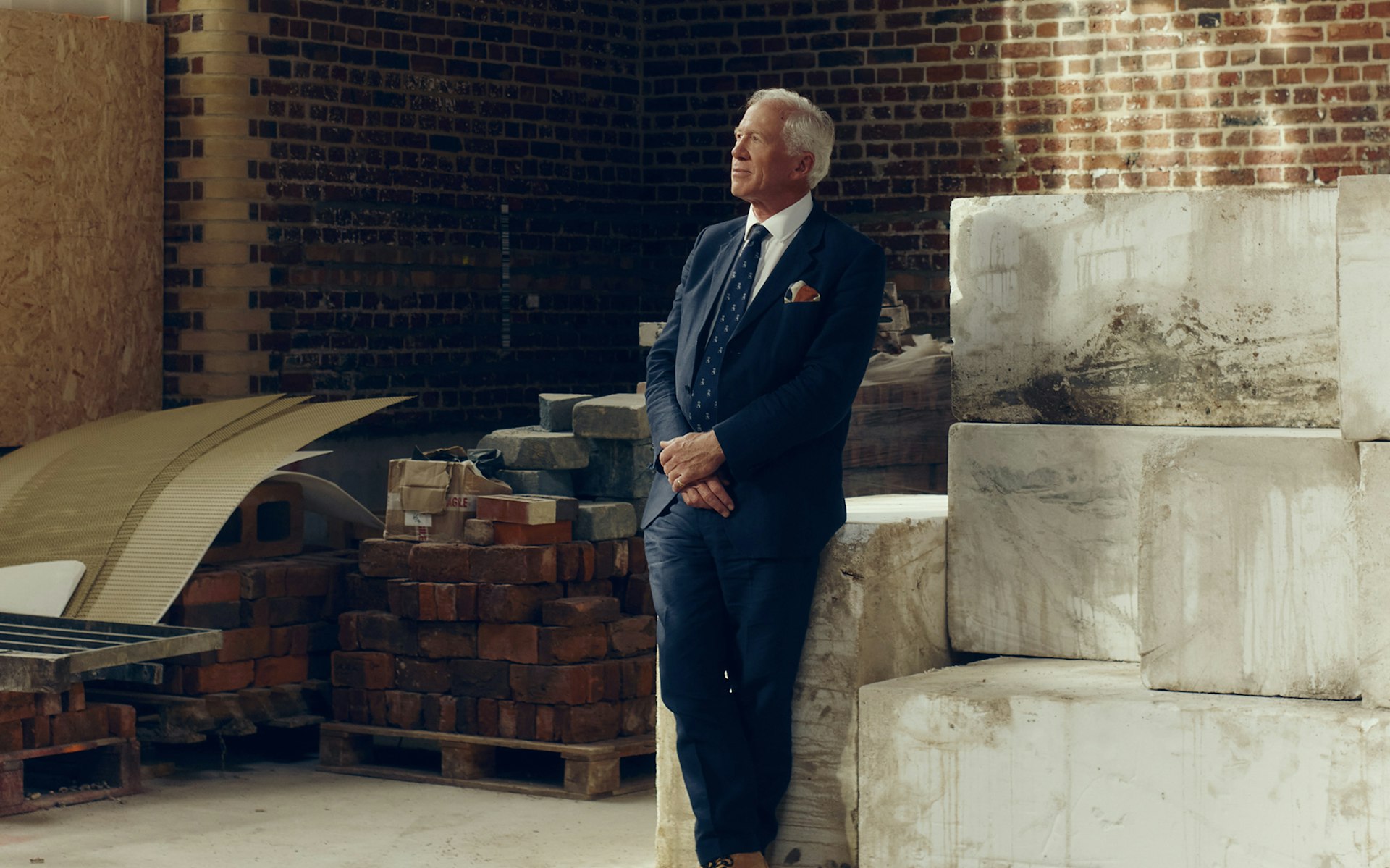
The Royal military history of St John’s Wood Square with Major General Matthew Sykes
Major General Matthew Sykes, military historian, former officer of The King’s Troop Royal Horse Artillery and for 10 years its Honorary Regimental Colonel, traces the remarkable evolution from woods and farmland to barracks and beyond of a neighbourhood that has always felt both part of the capital’s centre and apart from it.
“The first time the army moved into St John’s Wood was in 1804, when it was just a collection of farm buildings – a dairy farm,” says Major General Matthew Sykes, military historian, officer of The King’s Troop Royal Horse Artillery and its former Honorary Regimental Colonel. “In those days, London stopped at the Marylebone Road.”
When the barracks were built shortly after, in 1812, St John’s Wood was still the countryside on the edge of London, ‘rus in urbe’. Its fine air and greenery made it something of a resort, a respite from the pollution and noise of what was then becoming the biggest city the world had ever known.
Its name was no picturesque imagining; it really was a wood, its existence already recorded in the Domesday Book in 1086. The other part of its name derives from the Order of St John, founded in Jerusalem in the 11th century, into whose ownership the wood had come after the dissolution of the previous owners, the Knights Templar, in 1312.
By the time of the Civil War in the 17th century, the forests had given way to meadows, huge swathes of land devoted to making hay for feeding the horses which kept London running. In 1823, it was horses again which created the character of the neighbourhood, with the building of the Riding School for the Cavalry Riding Establishment for the Board of Ordnance (from which Ordnance Hill received its name). “At first, the troops were stationed here for internal security,” says Major General Sykes, describing the fears of a restless city in the wake of the French Revolution.

The King’s Troop
Royal Horse Artillery

Major General Matthew Sykes
But the Riding School’s scale and grandeur reflected a new confidence in a post-Waterloo world in which Wellington’s army and their allies had defeated the once seemingly unbeatable French. Today, the building remains at the heart of St John’s Wood Square, transformed into The Riding Club, as a rare example of military architecture from the period.
In 1880, the barracks became the home of the Royal Horse Artillery. Over time, the battery stationed there took on an ever-increasing ceremonial role in addition to its operational responsibilities. The latter, however, came to a head in 1939, when K Battery Royal Horse Artillery was mobilised and sent to join the British Expeditionary Force in France. The King was personally consulted about this decision, and agreed on the proviso that a ceremonial unit of Royal Horse Artillery should return to St John’s Wood when the Second World War was over.
King George VI got his wish, and the Riding Troop Royal Horse Artillery was formed, taking up residence in the barracks in 1946. “After the war, the barracks were closely associated with royalty. Senior members of the Royal family visited us regularly, including Queen Elizabeth II, Queen Elizabeth The Queen Mother, the Princess Royal and the then-Prince Charles and Princess Diana.” says Sykes.
“The name ‘King’s Troop’ was bestowed on us personally by King George VI,” Sykes continues. “In 1947, the King inspected The Riding Troop in St John’s Wood and evidently liked what he saw. At the end of the visit, the King personally crossed out the word ‘Riding’ in the visitors’ book and replaced it with ‘King’s’. When she came to the throne, Queen Elizabeth II retained the name in honour of her father.” This royal connection lives on in the carefully considered new place names of St John’s Wood Square, including King George VI Avenue, King’s Terrace and Troop Lines.
"Senior members of the Royal family visited us regularly, including Queen Elizabeth II, Queen Elizabeth The Queen Mother, the Princess Royal and the then-Prince Charles and Princess Diana"
Major General Matthew Sykes
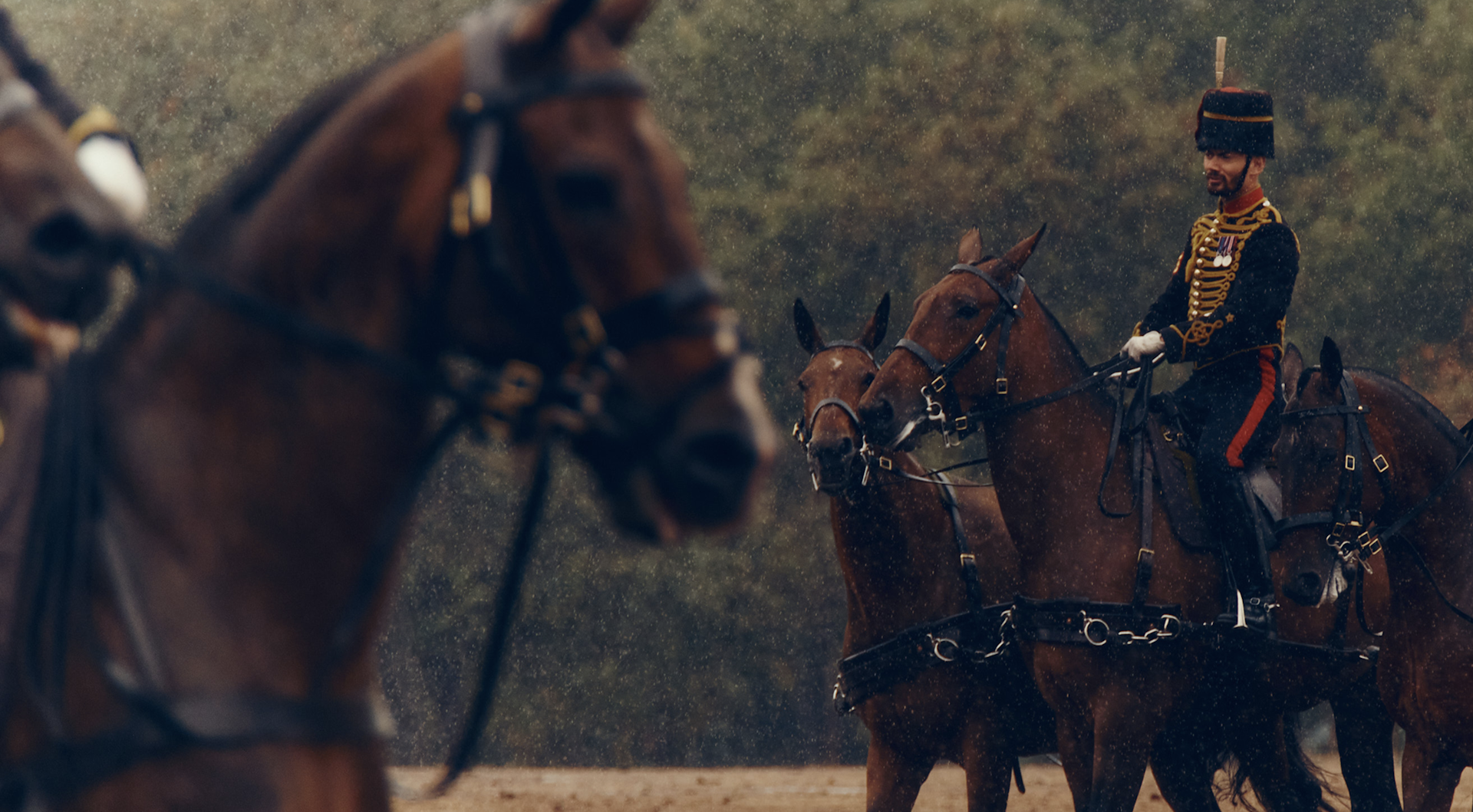

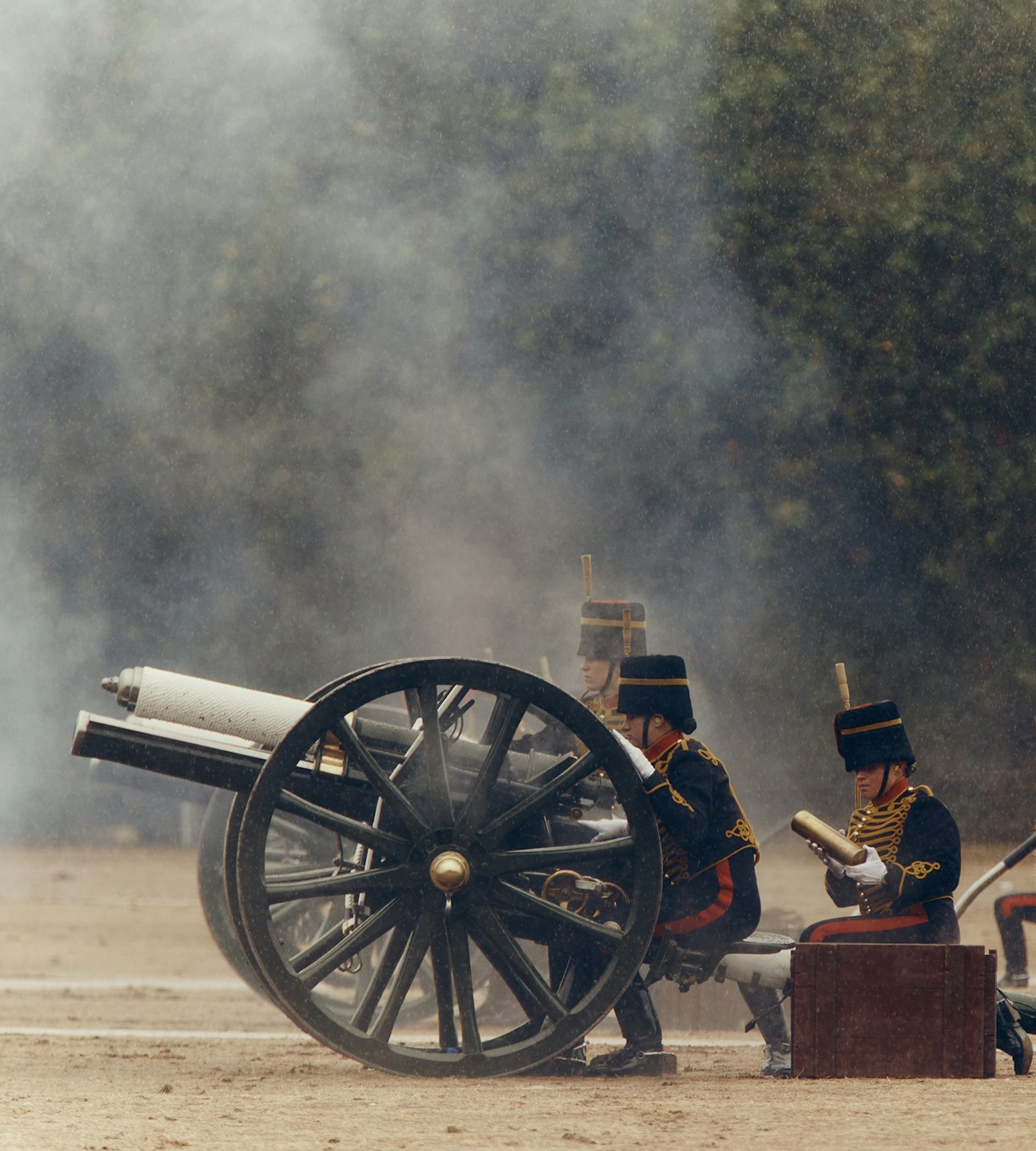
The King’s Troop
Ceremonial Service Practice
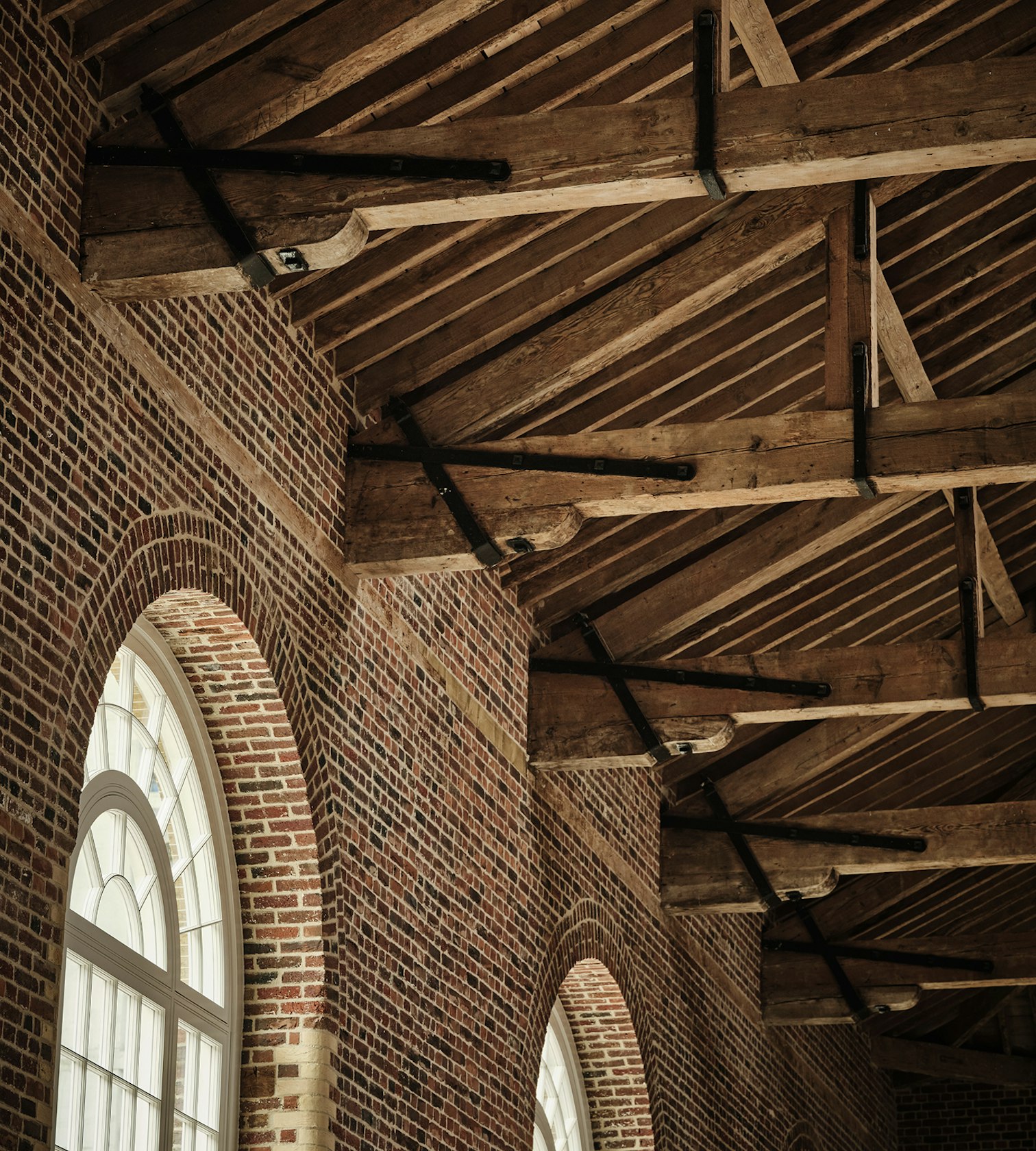
Soaring volume & original beams
The Grade II-listed Riding School
The King’s Troop Royal Horse Artillery remains a regiment of the British Army, familiar with their distinctive, Hussar-inspired uniform with its gold-corded tunic and busby hat with a feather plume. “This is the unit, now stationed in the Royal Borough of Greenwich, which fires London’s royal gun salutes using the 13-pounder, a First World War-era field gun,” says Sykes. It was The King’s Troop that provided the gun carriage and horses which transported Queen Elizabeth II’s coffin from Buckingham Palace to Westminster Hall in 2022.
During their active years, the barracks contained everything a unit of approximately 120 horses and 200 people would need – and until 2012, the site remained a piece of urban history of a kind that had long disappeared elsewhere, all contained inside its high military walls.
Through the 19th century, the neighbourhood of St John’s Wood grew up around the barracks, enveloping a once rural site in Victorian urbanity. However, while much of London during this period was allowed to grow in a seemingly chaotic and haphazard fashion, this area formed part of visionary architect John Nash’s grand plan for London, with spacious villas and wide, tree-lined streets.
With its elevated site and position by the park, but also its proximity to London’s most fashionable neighbourhoods, St John’s Wood quickly became popular, particularly with artists, poets and bohemians. Despite the passage of time, elements of this character remain.
The site of St John’s Wood Square now sits in an embrace between Regent’s Park, Lord’s Cricket Ground and Primrose Hill, a place of idyllic urban calm enveloped in green and a landscape of leisure. Despite significant changes to its fabric over the last couple of centuries, it retains a very particular character: both of and apart from the capital – an elevated green suburb, yet surprisingly, still at the centre of the city.


At the heart of St John's Wood Square, the carefully restored Grade II-listed Riding School has been reimagined by WilkinsonEyre as The Riding Club, a private residents' club for those who call this address home. This historic building, long associated with rhythm, ritual and community, now offers a sanctuary designed to enhance health and wellbeing and bring residents together.
Explore


