The Neighbourhood
Local Roots, Global Impact
In Conversation With
Eva Langret, Director of EMEA at Frieze

Each October, The Regent’s Park, adjacent to St John’s Wood, becomes a meeting place for the international art world as Frieze brings together leading artists, galleries, collectors and institutions from across the globe. More than two decades after the fair began here, the park has become inseparable from its identity. Eva Langret, Director of EMEA at Frieze, discusses how Frieze London has become one of the world’s defining contemporary art fairs while remaining deeply rooted in Regent’s Park and the surrounding neighbourhood.
“London is one of the world’s leading cultural capitals and the second-largest art market in the world,” says Eva Langret, Director of EMEA at Frieze. “Frieze brings all of that density into focus.” Held each October in Regent’s Park, adjacent to St John’s Wood, Frieze transformed the global art fair landscape when it launched in 2003, reinvigorating the entire format of the art fair and establishing London as a principal centre for the contemporary art market. Alongside ambitious gallery presentations, the fair is renowned for its curated sections, artist commissions and talks programme, making it both a major commercial marketplace and an influential forum for new artistic ideas.
Frieze London comprises three fairs in one: Frieze London itself, which specialises in contemporary art; Frieze Masters, which includes historic art and collectible design; and Frieze Sculpture in Regent’s Park. And while Frieze now includes events across the city, Regent’s Park has become inseparable from the identity of Frieze London. “It is where the Frieze story began,” explains Langret. “Frieze London held its first edition in Regent’s Park, and we have been here ever since. Walking through Frieze Sculpture in one of London’s Royal Parks, surrounded by some of the most exciting voices in contemporary art, captures the spirit of discovery that runs through the fair.”
Now in its third decade, Frieze has grown to include editions in Los Angeles, New York, Seoul, Chicago and Abu Dhabi. Yet for Langret, the original fair has qualities that could only really exist in London. “London is our most international fair, and at the heart of it is community and discovery: spotlighting the new and experimental alongside some of the most established names in the field,” she says. “This year, we welcome 171 galleries from 42 countries and regions.” While Frieze has become a destination for collectors, curators and museum directors from across the world, Langret is equally keen to emphasise its local role. “Frieze Week activates all of London, not just the fair itself,” she explains. Alongside the activity in Regent’s Park, institutions across the capital stage major exhibitions to coincide with the week, creating a city-wide celebration of art that reaches far beyond the fair’s temporary pavilions. Meanwhile, Frieze Sculpture remains free and open to everyone, allowing residents and visitors to encounter contemporary art in one of London’s great public parks, regardless of whether they step inside the fair itself.

Salomon Lilian
Frieze Masters 2025. Photo by Hugo Glendinning. Courtesy of Frieze.

David Zwirner
Frieze London 2025. Photo by Linda Nylind. Courtesy of Frieze.
“Frieze London held its first edition in Regent’s Park, and we have been here ever since. Walking through Frieze Sculpture in one of London’s Royal Parks, surrounded by some of the most exciting voices in contemporary art, captures the spirit of discovery that runs through the fair.”
Eva Langret
Director of EMEA at Frieze
That commitment to openness extends beyond the visitor experience. Recent editions have reworked the layout of the fair to give greater prominence to emerging galleries, while initiatives such as Focus, dedicated to galleries less than 12 years old, Artist-to-Artist, in which established artists nominate practitioners they believe deserve wider recognition, and the Frieze x Deutsche Bank Emerging Curators Fellowship all seek to turn a week of visibility into something far more enduring. “It’s where artists’ careers can materially accelerate,” says Langret, “and where relationships formed with peers, curators and institutions last long after the fair closes.”
For Langret, that spirit of discovery is what distinguishes Frieze London. Rather than simply presenting established names, the fair is designed to encourage visitors to encounter unfamiliar artists and fresh perspectives. The reconfigured 2026 entrance, for example, placed proposal-led presentations at the forefront of the visitor experience, while the rotating curated section, The Code Universe, explored how artists have responded to mass culture and the circulation of images from the mid-1980s to the present day.
Yet perhaps Frieze’s greatest achievement lies not in its commercial success, nor even in its international reach, but in its ability to connect its local area with the global cultural conversation. For one week each autumn, Regent’s Park becomes a meeting place for artists, galleries, collectors and institutions from around the world, while remaining firmly rooted in the everyday life of the neighbourhood.
“I want visitors to leave with that same sense of discovery,” Langret says. “What Frieze London offers – a serious international audience, visibility and relationships that extend well beyond the fair week – remains enormously valuable. For many galleries, that exposure can make a genuine difference.”
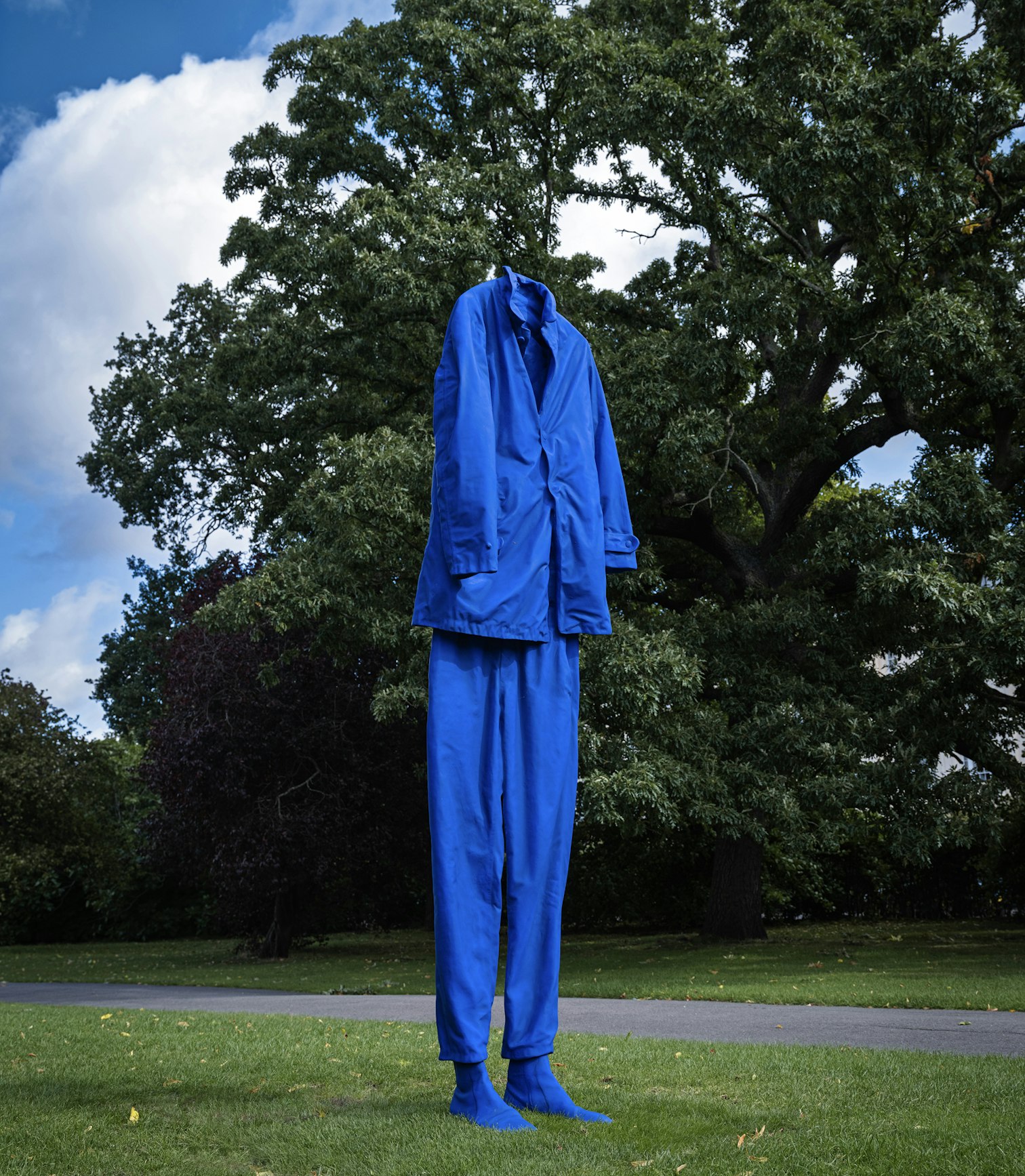
Erwin Wurm, Ghost (Substitutes), 2022
Presented by Thaddaeus Ropac. Frieze Sculpture 2025. Photo by Linda Nylind. Courtesy of Frieze.


